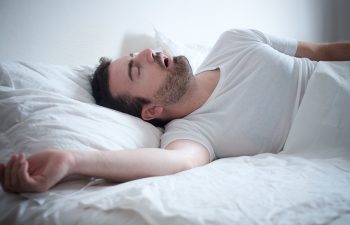
You wake up tired despite getting what should have been enough sleep. You snore loudly enough that your partner has relocated to the guest room. You catch yourself nodding off during afternoon meetings or struggling to concentrate on tasks that used to come easily. Maybe you’ve even been told you stop breathing periodically during the night – gasping awake without remembering it, leaving you exhausted without understanding why.
These symptoms point toward sleep apnea, a condition affecting an estimated 22 million Americans, with the vast majority remaining undiagnosed. What many people don’t realize is that their dentist may play a key role in treatment. For patients with mild to moderate obstructive sleep apnea – or those who can’t tolerate CPAP therapy – oral appliances prescribed by specially trained dentists offer an effective, comfortable alternative.
At Scott A. Babin, DDS & Associates, sleep apnea treatment is part of the comprehensive care provided at both the Edmonds and Renton locations. Dr. Scott Babin, a University of Michigan graduate who has served Seattle Metro families since 2003, combines ongoing training with patient-centered care to help patients find solutions that actually work for their lives.
What Happens During Obstructive Sleep Apnea
Obstructive sleep apnea (OSA) occurs when soft tissues in the throat collapse during sleep, blocking the airway. The brain senses falling oxygen levels and briefly wakes you to restore breathing – often without your conscious awareness. This pattern can repeat dozens or even hundreds of times nightly, fragmenting sleep and preventing the deep, restorative rest your body needs.
The consequences extend far beyond daytime fatigue. Untreated sleep apnea increases risk for high blood pressure, heart disease, stroke, type 2 diabetes, and depression. It impairs cognitive function, affects memory, and raises accident risk – both on the road and at work. Partners often suffer too, losing sleep to snoring that can reach volumes comparable to lawn equipment.
Risk factors include excess weight, larger neck circumference, being male (though women’s risk increases after menopause), and anatomical features like a recessed jaw, large tongue, or narrow airway. However, sleep apnea can affect anyone, including fit individuals without obvious risk factors.
How Oral Appliances Work
Oral appliances for sleep apnea – sometimes called mandibular advancement devices – look similar to sports mouthguards or orthodontic retainers. They work by repositioning the lower jaw slightly forward during sleep, which helps maintain an open airway by keeping soft tissues from collapsing backward.
The appliance is custom-made from impressions or digital scans of your teeth, ensuring precise fit and comfort. You wear it only during sleep. Most patients adjust to the appliance within a few weeks, and many find it dramatically more comfortable and easier to use consistently than CPAP machines.
For patients with mild to moderate obstructive sleep apnea, oral appliances are considered a first-line treatment option by the American Academy of Sleep Medicine. They’re also recommended for patients with severe sleep apnea who can’t tolerate or refuse CPAP therapy – because a treatment you actually use is always more effective than one gathering dust in a closet.
Why Some Patients Prefer Oral Appliances Over CPAP
CPAP (Continuous Positive Airway Pressure) remains the gold standard treatment for sleep apnea, particularly for severe cases. The machines work well when used consistently. The problem is that many patients don’t use them consistently.
CPAP requires wearing a mask connected by tubing to a machine that blows pressurized air. Some patients find the masks uncomfortable, claustrophobic, or difficult to keep sealed during sleep. The machines make noise. Travel becomes complicated. Partners may object to sharing a bed with the apparatus. And the requirement to use it every single night, without exception, becomes burdensome for some lifestyles.
Compliance rates tell the story. Studies suggest that 30 to 50 percent of CPAP users don’t use their machines consistently enough to benefit fully. An oral appliance that gets worn nightly often delivers better real-world results than a CPAP that sits unused.
Oral appliances offer several practical advantages: they’re silent, portable, easy to travel with, and require no electricity. There’s no mask, no tubing, no machine noise. For patients whose sleep apnea falls in the mild to moderate range, or who have tried and failed CPAP therapy, oral appliances provide an effective alternative that actually gets used.
The Process of Getting an Oral Appliance
Treatment begins with proper diagnosis. Sleep apnea must be confirmed through a sleep study – either an in-lab polysomnogram or a home sleep test – before treatment can begin. If you haven’t been diagnosed but suspect sleep apnea based on symptoms, the first step is discussing evaluation with your primary care physician or a sleep medicine specialist.
Once diagnosed, you’ll consult with Dr. Babin to determine whether an oral appliance is appropriate for your situation. This involves examining your teeth, jaw, and oral structures to ensure you’re a good candidate. Not everyone is – significant dental problems, certain jaw conditions, or severe sleep apnea may require different approaches.
If you proceed, precise impressions or digital scans capture your dental anatomy. Your custom appliance is fabricated by a specialized dental lab, typically taking two to three weeks. At your fitting appointment, Dr. Babin adjusts the appliance for comfort and proper jaw positioning.
Follow-up care is essential. Most appliances are adjustable, allowing fine-tuning of jaw position to optimize effectiveness while minimizing any side effects. After initial adjustment, a follow-up sleep study may be recommended to confirm the appliance is adequately controlling your sleep apnea. Ongoing monitoring ensures the appliance continues working well and identifies any dental changes that might occur over time.
What to Expect When Using an Oral Appliance
Most patients adapt to wearing an oral appliance within one to two weeks. Initial sensations of jaw tightness or mild discomfort are normal and typically resolve as your muscles adjust to the new position.
Some patients experience temporary side effects including excessive salivation, dry mouth, or mild tooth discomfort. These effects usually diminish with continued use. Long-term use can sometimes cause minor changes in bite alignment, which is why ongoing monitoring matters – catching any changes early allows adjustment before they become problematic.
The benefits often appear quickly. Partners notice reduced snoring immediately. Patients report feeling more rested, more alert, and more focused within days to weeks of consistent use. For patients who struggled with CPAP compliance, finally getting effective treatment often feels transformative.
Signs You Should Ask About Sleep Apnea
If you experience any of the following, discussing sleep apnea with your dentist or physician makes sense:
- Loud, persistent snoring: Not everyone who snores has sleep apnea, but loud snoring – especially with gasping or choking sounds- warrants evaluation.
- Witnessed breathing pauses: If a partner has observed you stop breathing during sleep, this is highly suggestive of apnea.
- Excessive daytime sleepiness: Feeling exhausted despite adequate time in bed, falling asleep in meetings, or needing caffeine to function suggests poor sleep quality.
- Morning headaches: Waking with headaches, particularly those that fade during the day, can indicate oxygen fluctuations during sleep.
- Difficulty concentrating or memory problems: Sleep deprivation affects cognitive function in ways that may be attributed to aging, stress, or other causes.
- Irritability or mood changes: Fragmented sleep affects emotional regulation, contributing to irritability, anxiety, and depression.
Take the First Step Toward Better Sleep
Quality sleep affects every aspect of health and daily function. If you suspect sleep apnea is disrupting your rest – or if you’ve been diagnosed but can’t tolerate CPAP – oral appliance therapy may offer the solution you’ve been looking for.
Schedule Your Consultation at Scott A. Babin, DDS & Associates
Dr. Scott Babin and his team provide sleep apnea treatment as part of comprehensive dental care at two convenient Seattle Metro locations. With CEREC technology for same-day crowns, sedation options for anxious patients, and a family-focused approach that has earned patient trust since 2003, you’ll find care that fits your needs.
Contact the Edmonds office at (425) 775-1766 (7631 212th St SW, Suite 109C) or the Renton location at (425) 227-7788 (4300 Talbot Road S, Suite 305). Online scheduling is available at both locations. Veterans can receive dental care at no cost through VA referrals – ask about the Community Care VA program when you call.
Stop settling for exhausted days and restless nights. Better sleep may be one conversation away.
Posted on behalf of
